


Embracing Age After 40 Inspiring Women to Rise Above Ageism and Own Their Power

A woman can be called “too young” for years, then suddenly “too old” before she has even caught her breath.
That is the quiet cruelty of ageism. For women over 40, it often shows up in everyday moments: a raised eyebrow at gray roots, a workplace comment about “fresh energy,” dating app filters, beauty ads that treat aging like a flaw, or family members who expect women to shrink their dreams as they gain years.
Yet life after 40 can also bring a stronger voice, deeper self-knowledge, better boundaries, richer relationships, and a clearer sense of what matters. Aging does not erase a woman’s value. It reveals what she has survived, learned, built, and still has the courage to become.
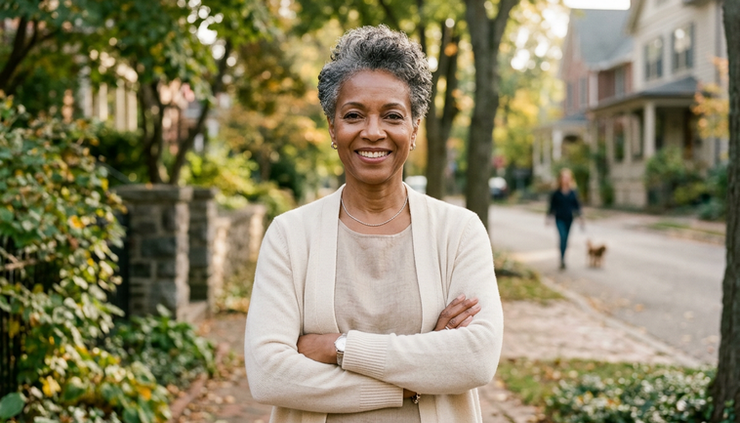
The pressure to stay young starts early
Many women learn early that youth is treated like currency. Girls are praised for being pretty, women are judged for “letting themselves go,” and older women are often pushed to the edges of culture unless they look younger than their years.
This pressure does not come from one place. It comes from beauty standards, entertainment, dating culture, workplace bias, and even well-meaning family comments.
A woman turns 40 and suddenly hears questions like:
“Are you going to do something about those lines?”
“Isn’t that outfit too young for you?”
“Do you still want to start over at this age?”
“Shouldn’t you be slowing down?”
“You look great for your age.”
That last one may sound like a compliment, but it often carries a sting. It suggests that looking good and being older are not expected to go together.
Ageism against women also overlaps with sexism. Men are often called distinguished as they age. Women are told to hide it. Men may be seen as experienced. Women may be seen as expired.
This double standard shows up in real ways.
At work, women over 40 may be overlooked for promotions, assumed to be less adaptable, or pressured to compete with younger colleagues in ways that have nothing to do with skill. In dating, they may face dismissive attitudes from people who treat youth as the main measure of desirability. In media, older women are still underrepresented compared with older men, especially in roles that show romance, ambition, complexity, and joy.
The message is clear, but false: aging makes women less visible.
The truth is stronger: aging can make women more discerning, more rooted, and more unwilling to perform for approval.
The stereotypes are tired, and women are not
Ageist stereotypes are lazy shortcuts. They flatten women into assumptions instead of seeing them as whole people.
Some of the most common stereotypes say women over 40 are:
Less attractive
Less ambitious
Less open to change
Less energetic
Less relevant
Less worthy of desire, attention, or opportunity
None of these are facts. They are stories society repeats until they sound normal.
A 46-year-old woman can start a new degree. A 53-year-old woman can fall in love. A 61-year-old woman can lift weights, write a book, leave a stale marriage, travel alone, start therapy, launch a business, or rest for the first time in her life without apologizing.
A 72-year-old woman can still be curious, sensual, funny, stylish, creative, and bold.
There is no single way to age.
Some women embrace gray hair. Some dye it purple, black, blonde, copper, or not at all. Some love makeup. Some give it up. Some date. Some do not. Some want career growth. Some want peace over ambition. Some care for parents, partners, children, grandchildren, communities, or themselves.
The point is choice.
The problem is not beauty routines, fashion, fitness goals, or wanting to feel attractive. The problem is the belief that women must fight aging to remain worthy.
That belief steals joy. It turns mirrors into scorecards. It makes women question whether they are allowed to take up space.
Aging should not be treated like a personal failure. It is evidence of life continuing.
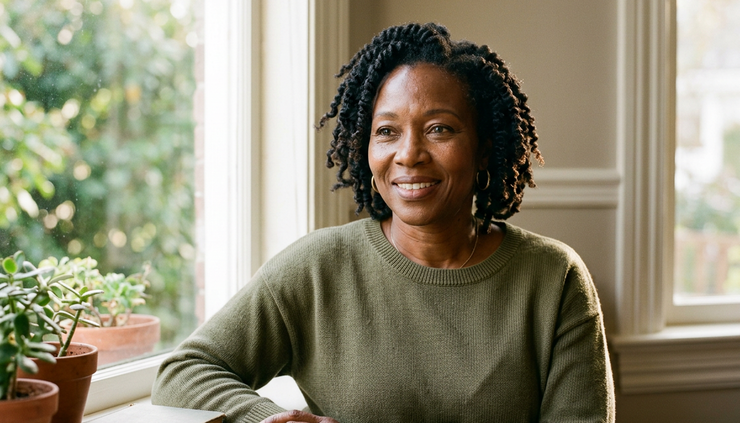
Stories of women who refused to disappear
The following stories are anonymized composites based on common experiences many women describe. They may not belong to one single person, but they reflect truths that countless women recognize.
Nadia found her voice at 44
Nadia spent years being the dependable one. At work, she trained new hires, fixed mistakes, and took on extra tasks. When a leadership role opened, a younger colleague was encouraged to apply. Nadia was told she was “steady,” but the company wanted “new energy.”
For a week, she felt embarrassed for wanting more. Then she got angry.
She documented her work, asked for a clear meeting, and named the pattern without shrinking. When nothing changed, she applied elsewhere. Six months later, she accepted a role with better pay and more respect.
“I used to think being overlooked meant I had missed my moment. Now I know it meant I was in the wrong room.”
Nadia’s story matters because ageism often teaches women to internalize rejection. Her response shows another path. She did not beg to be seen. She took her skills where they were valued.
Elaine stopped apologizing for her gray hair at 58
Elaine dyed her hair every four weeks for years. She did not hate dye. She hated the panic she felt when silver showed at her roots.
One day her granddaughter pointed to an old photo and asked, “Why are you trying to erase yourself?”
The question stayed with her.
Elaine grew out her gray slowly. At first, strangers made comments. Some women praised her. Others asked if she was afraid it would make her look older.
Her answer became simple: “I am older. I am also still me.”
Gray hair did not make Elaine brave. Choosing for herself did.
Ruth began again at 63
After a divorce, Ruth moved into a small apartment and took a pottery class. She had spent decades caring for others. Her first bowl collapsed in her hands. She laughed so hard she cried.
That class became a doorway. She made friends, sold a few pieces at a local market, and began to see herself as someone in progress rather than someone past her prime.
“I thought I was starting over with less. I was really starting over with myself.”
Ruth’s story offers a gentle reminder. Reinvention does not have to look dramatic. Sometimes it starts with wet clay, a free Tuesday night, or the decision to try something badly before getting better.
Mei chose softness and strength at 71
Mei grew up believing older women should be quiet, helpful, and modest. She loved her family deeply, but she often swallowed her needs to keep peace.
In her 70s, she began saying small truths out loud. She told her adult children she was not available for every last-minute request. She took morning walks with a neighbor. She bought bright scarves. She joined a community dance group.
Nothing about her love became smaller. Her life simply made room for her too.
That is one of the gifts of age. Many women reach a point where pleasing everyone feels too expensive.
Confidence after 40 is built in daily choices
Confidence is not a permanent mood. It is a practice. Some days it feels easy. Other days, a comment, rejection, photo, birthday, or body change can stir old doubts.
The goal is not to feel fearless all the time. The goal is to stop letting ageist messages make decisions for you.
Here are practical ways to push back in everyday life.
Question the comment instead of absorbing it
When someone says something ageist, pause before accepting it as truth.
If a person says, “You are too old for that,” ask:
“What makes you say that?”
“Too old by whose standard?”
“Would you say that to a man my age?”
“Why does age matter here?”
You do not always need a debate. Sometimes a calm question exposes the bias.
Stop using age as an insult against yourself
Many women repeat ageist ideas without meaning to.
They say, “I’m having a senior moment,” or “I can’t wear that at my age,” or “No one wants to hear from someone my age.”
Self-talk matters. It shapes what feels possible.
Try replacing those lines with better ones:
Instead of saying | Try saying |
“I’m too old to start.” | “I can begin from where I am.” |
“I look old.” | “My face reflects my life.” |
“I missed my chance.” | “My timeline is still mine.” |
“I have to keep up.” | “I get to choose what fits me now.” |
These phrases may feel awkward at first. That is normal. New beliefs often sound strange until they become familiar.
Wear what feels honest
Style after 40 does not need permission.
Wear the jeans, the lipstick, the silver hair, the short haircut, the long braids, the sleeveless dress, the sneakers, the red coat, the soft cardigan, the gold hoops. Wear what supports the life you are living now.
The best style question is not, “Does this make me look younger?”
A better question is, “Does this feel like me?”
Protect your ambition
Ageism often whispers that ambition has an expiration date. It does not.
Apply for the role. Start the training. Pitch the idea. Take the class. Ask for the raise. Return to school. Open the shop. Write the proposal. Learn the instrument. Rest without announcing your productivity.
Your ambition may change shape with age. That does not make it weaker. It may become more focused.
Experience is not baggage. It is evidence.
Build relationships that honor your whole self
Spend time with people who do not treat aging like a tragedy.
Look for friendships across generations. Younger women need models of aging that are full and free. Older women need connection that does not reduce them to advice-givers or caretakers.
At the same time, seek out peers who understand the strange mix of grief and freedom that can come with midlife and beyond. There is relief in being around women who do not need every feeling explained.
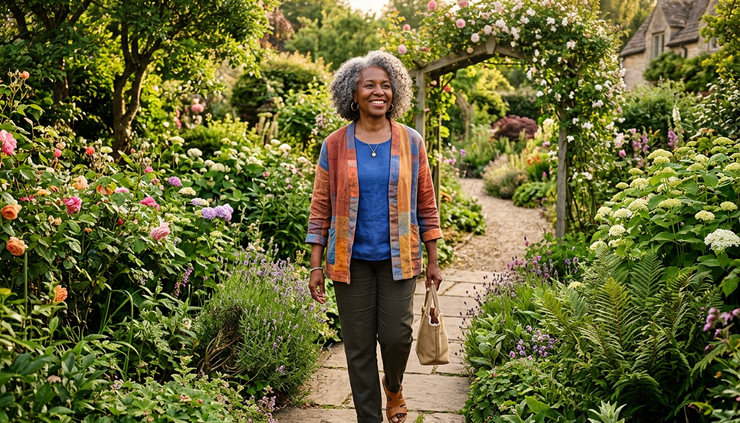
How to challenge ageism where it shows up
Personal confidence matters, but ageism is not only personal. It is cultural. That means everyday resistance also matters.
Speak up when ageist jokes appear
Ageist jokes are often dismissed as harmless. They are not harmless when they train people to see older adults as incompetent, unattractive, or irrelevant.
A simple response can be enough:
“I don’t love jokes that make aging sound shameful.”
“Older does not mean useless.”
“Let’s not make age the punchline.”
You do not need to deliver a lecture. A short correction can change the tone of a room.
Notice workplace bias
If you see older women being passed over, interrupted, excluded from training, or described with coded language, name it when it is safe to do so.
Coded language can include words like “low energy,” “not a culture fit,” “set in her ways,” or “overqualified” when they are used without clear evidence.
Support can look like:
Recommending experienced women for visible projects
Crediting their ideas in group settings
Asking who is missing from leadership conversations
Pushing for skills-based feedback instead of vague impressions
Mentoring across age groups in both directions
Younger workers can teach new tools. Older workers can share judgment, context, and pattern recognition. Teams are stronger when experience and fresh perspective are not treated as enemies.
Choose media that shows women aging fully
What we watch and read affects what we expect.
Seek books, shows, films, podcasts, and art that portray women over 40 as complex people with desire, flaws, humor, leadership, style, sexuality, faith, doubt, and dreams.
When media reduces older women to mothers, grandmothers, villains, or background characters, it narrows the cultural imagination. When it shows them as full humans, everyone benefits.
Compliment without comparing age
Aging-positive language does not mean avoiding compliments. It means giving better ones.
Instead of “You look young,” try:
“You look radiant.”
“You seem so at ease in yourself.”
“Your style is beautiful.”
“You have such a strong presence.”
“I love the way you carry yourself.”
These compliments do not require youth to be the highest praise.
Let younger women see another way
One powerful way to fight ageism is to live visibly.
Let younger women see you learning, resting, changing, dating, laughing, grieving, saying no, starting over, wearing what you love, and telling the truth about your life.
Many younger women fear aging because they have been shown only loss. Your life can offer another image.
Not a perfect image. A real one.
Embracing age means refusing to shrink
To embrace age is not to pretend every part of aging is easy. Bodies change. Hormones shift. Caregiving demands can grow. Loss becomes more familiar. Some dreams need to be mourned before new ones can take shape.
But difficulty does not erase beauty.
Women over 40 are not fading. They are often entering a season of stronger clarity. They know which friendships nourish them. They know which rooms make them small. They know how quickly time passes, and that knowledge can make life more precious.
There is power in a woman who no longer mistakes approval for safety.
There is power in a woman who can say, “This is my face, my body, my history, my future.”
There is power in resting. In beginning. In leaving. In staying because it is right, not because fear made the choice. In laughing louder. In asking for more. In accepting less nonsense.
Age does not have to be hidden, softened, or explained away. It can be claimed.
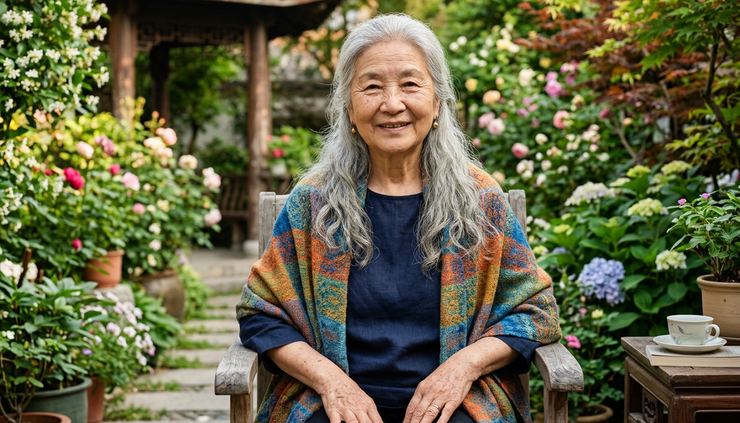
The next chapter belongs to women who claim it
Ageism asks women to become smaller with time. Life asks something better. It asks women to become more honest.
After 40, confidence may look different than it once did. It may be less loud and more certain. It may come from surviving the hard thing, raising the child, leaving the job, healing the wound, learning the lesson, losing the mask, or finally hearing your own voice clearly.
The years have not made you less. They have given you more to stand on.
So take the photo. Wear the color. Apply for the thing. Say the sentence. Let the silver show, or do not. Love again, or choose your own company. Change your mind. Protect your peace. Refuse the joke. Tell the truth.
Your age is not an apology.
It is a record of your becoming, and you are still becoming.
Follow @finergyglobal1 on Instagram for your daily fuel.


Comments